
#378: The SEC's Project Crypto
🎁 PLUS: NBA Top Shot and Courtyard's vending machine expansion

The SEC announces Project Crypto
Today the SEC announced Project Crypto, an effort to support crypto innovation in the US. Although the signs were there (eg: ETP in-kind redemptions, dropping lawsuits and investigations against Binance, Coinbase, Crypto.com, Immutable, Yuga, Kraken, Gemini, Consensys, OpenSea, Uniswap and countless others), this is a move that not just reverses the damage done over the past several years, but productively sets the stage for the next chapter of building in crypto in the US.
NGL, I sorta did a mental version of this when I read Chairman Paul Atkins’ speech, because I am still under the PTSD of the SEC being against the industry I’ve been a part of for the past few years.
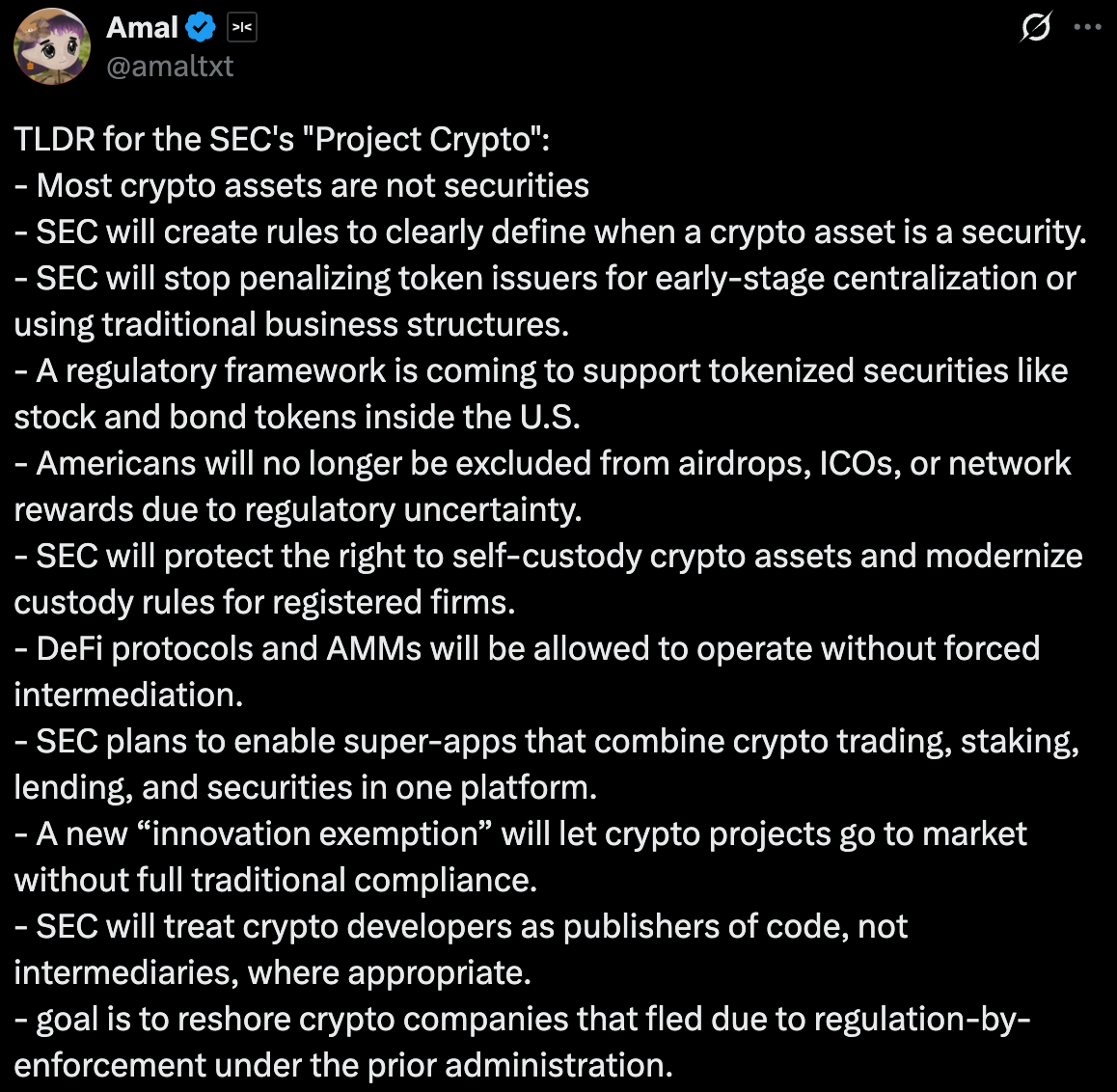
Haseeb and Amal from Dragonfly shared helpful TLDR’s, and I’ll go into a bit more detail on some of the points and potential implications.
Categorizing crypto assets
I have directed the Commission staff to work to develop clear guidelines that market participants can use to determine whether a crypto asset is a security or subject to an investment contract. Our goal is to help market participants to slot crypto assets into categories, such as digital collectibles, digital commodities, or stablecoins, and assess the economic realities of a transaction. This approach can allow market participants to determine, based upon clear guidelines, whether any outstanding promises or commitments of the issuer cause the crypto asset to be subject to an investment contract.
This statement is notable for a couple reasons:
The SEC recognizes that the crypto ecosystem is rich and enables the creation of many different types of assets. When the average person hears the word ‘crypto’, they think Bitcoin or their favorite memecoin. In reality, there is a lot more than that and not every asset should be treated in the same way.
Specifically with NFTs (“digital collectibles”), the SEC of old charged Stoner Cats for the unregistered offering of NFTs in September 2023, which I wrote about.
The SEC recognizes that the actions it made in the past don’t make sense in today’s world and will be creating (as opposed to regulation by enforcement) reasonable guidelines that give builders and creators the space to do what they do best.
I mean, imagine if your Labubu collection had to be registered with the SEC 💀
We need rules and guidelines that aren’t one-size-fits-all, and the nuances of each type of asset need to be recognized.
Including Americans in token rewards
I have asked staff to propose purpose-fit disclosures, exemptions, and safe harbors, including for so-called “initial coin offerings,” “airdrops,” and network rewards. Regarding these sorts of transactions, our goal should be that issuers no longer exclude Americans from their distributions to avoid legal complexity and lawsuits, but instead choose to include Americans to enjoy legal certainty and an accommodating regulatory environment.
If you’re based in the US (and a handful of other jurisdictions) and have been an active participant in different projects, platforms, and protocols, you’ve likely come across a page like this when trying to claim an airdrop:

Do these folks have something against the US or something? Nope, they’re just wary of legal/regulatory backlash of giving people based in certain countries magic Internet money. Project Crypto will aim to remove these limitations and stop ‘protecting’ US-based users.
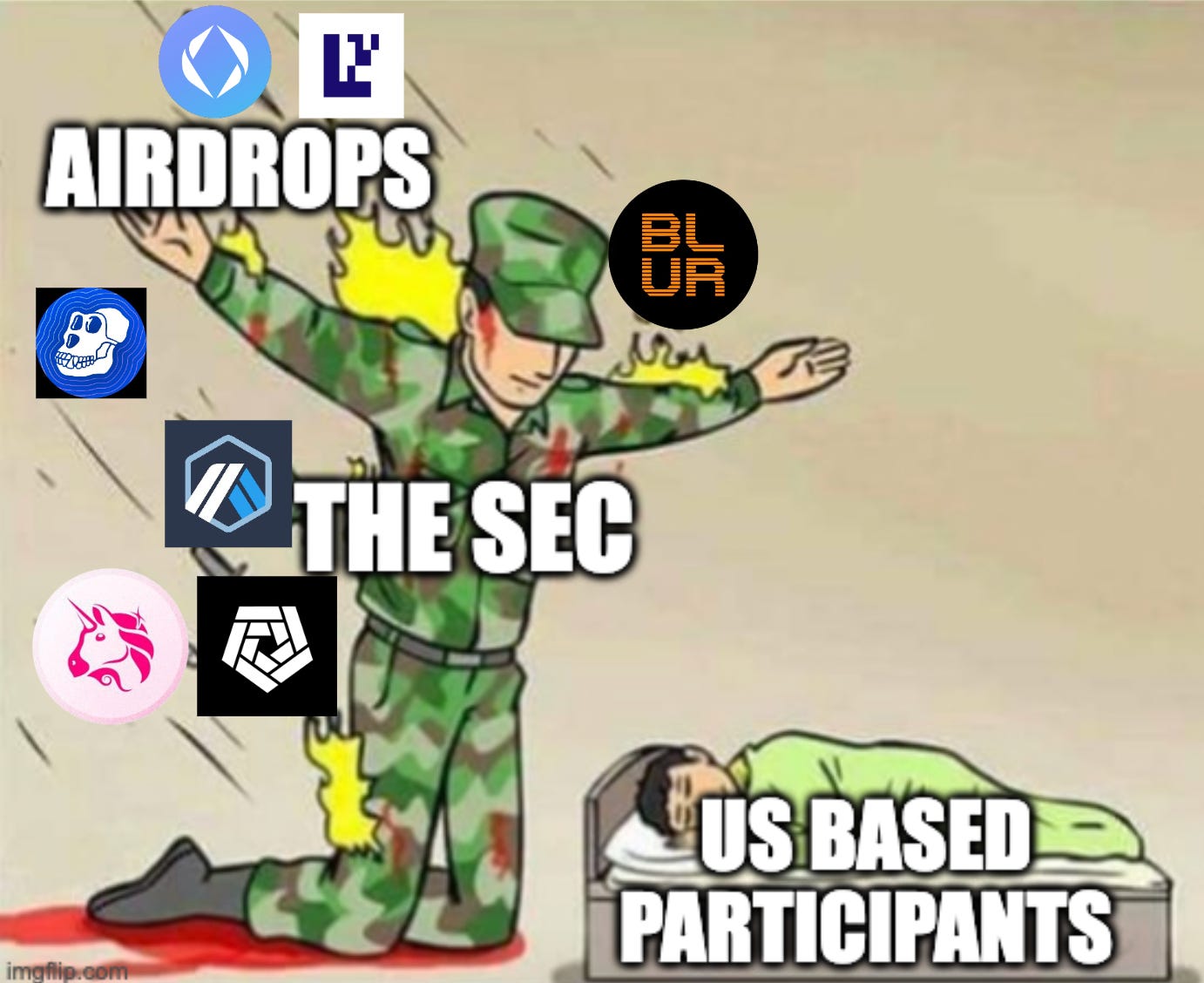
The obvious beneficiaries will be US residents, and the close number two are the projects and builders themselves.
Less legal overhead, less emotional toll, and most importantly less friction. Users won’t have to jump through the hoops of turning on their VPN or other shenanigans to claim their airdrop (eg: this viral post on how to claim the EIGEN airdrop for restricted users). Meanwhile, teams can get better signal around the event they’ve been working on for months and focus on more important things.
Innovation exemptions
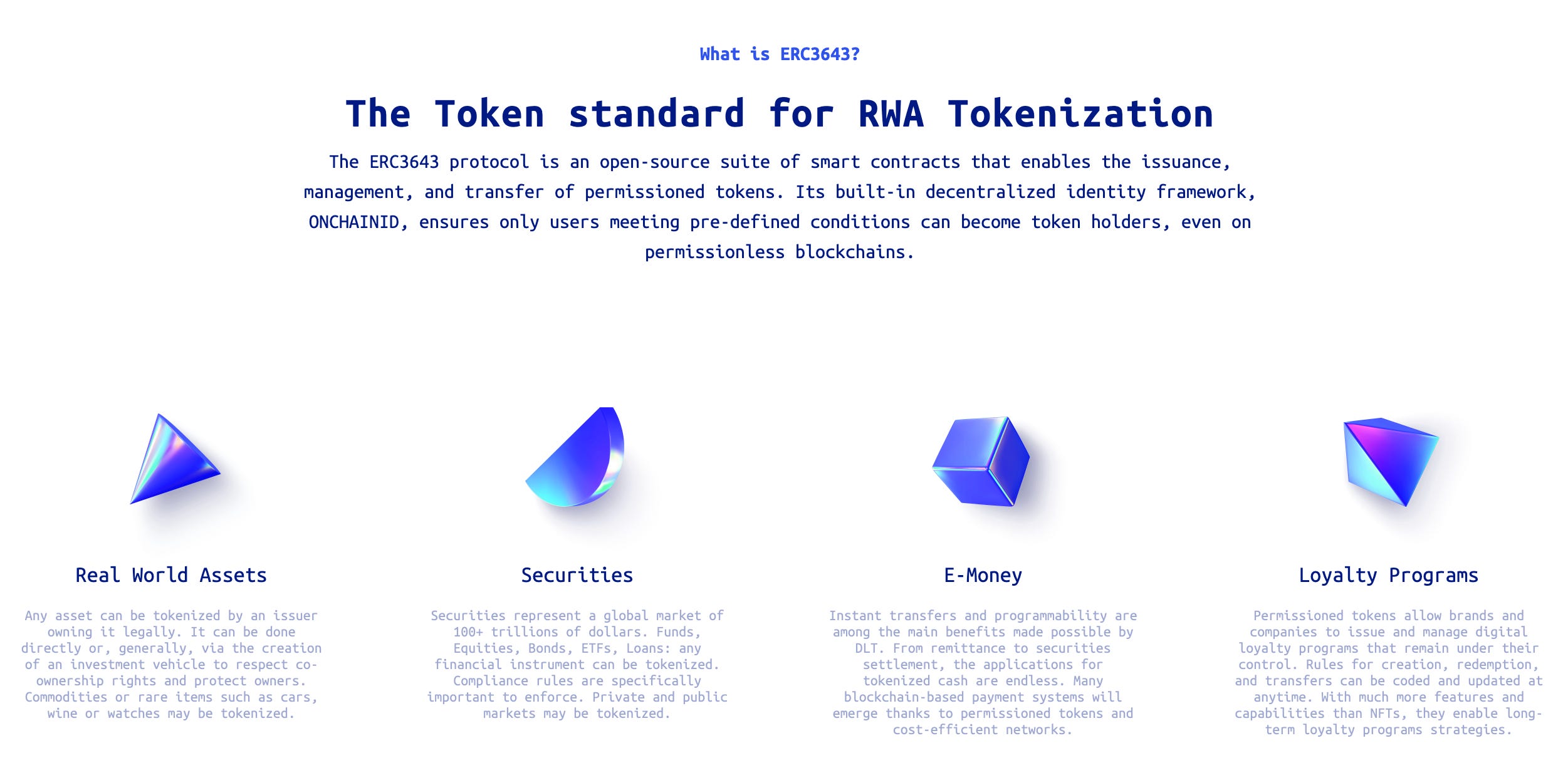
Under my vision for an innovation exemption, innovators and visionaries will be able to immediately enter the market with new technologies and business models but will not be required to comply with incompatible or burdensome prescriptive regulatory requirements that hinder productive economic activity. Instead, they will be able to comply with certain principles-based conditions designed to achieve the core policy aims of the federal securities laws. These conditions may include, for example, a commitment to make periodic reports to the Commission, incorporate whitelisting or “verified pool” functionality, and restrict tokenized securities that do not adhere to a token standard that incorporates compliance features, such as ERC3643.
This segment is cool because it references ERC-3643, an open-source token standard for RWA (real-world asset) tokenization. The SEC recognizes that the industry has worked on frameworks that can complement the guidelines they’ll put into place.
Instead of the wait-and-see approach of the past, builders can continue to push the boundaries of what can be done onchain. We’re not thinking ‘outside of the box’ anymore. We’re building on the edges of that box and pushing those edges further out.
Why does this matter?
Obviously, this matters for industry legal folks, but this is important for all types of operators and roles to follow these developments closely as well.
The lines in the sand of what’s strictly not allowed vs. what’s fair game is still blurry, but they’re shifting in favor of creativity. Many of the mechanics I’ve covered in the past will be seen less as a risky move and instead as a strategy or tactic that can be optimized and expanded upon. Great ideas that were rejected by legal can now be revisited with more confidence.
Bravo to the turnaround from the SEC! I’m looking forward to the next chapter of what will be possible and allowed in the US and globally.
NBA Top Shot and Courtyard expand
A couple of stories caught my eye with different companies operating in a similar space: trading cards.
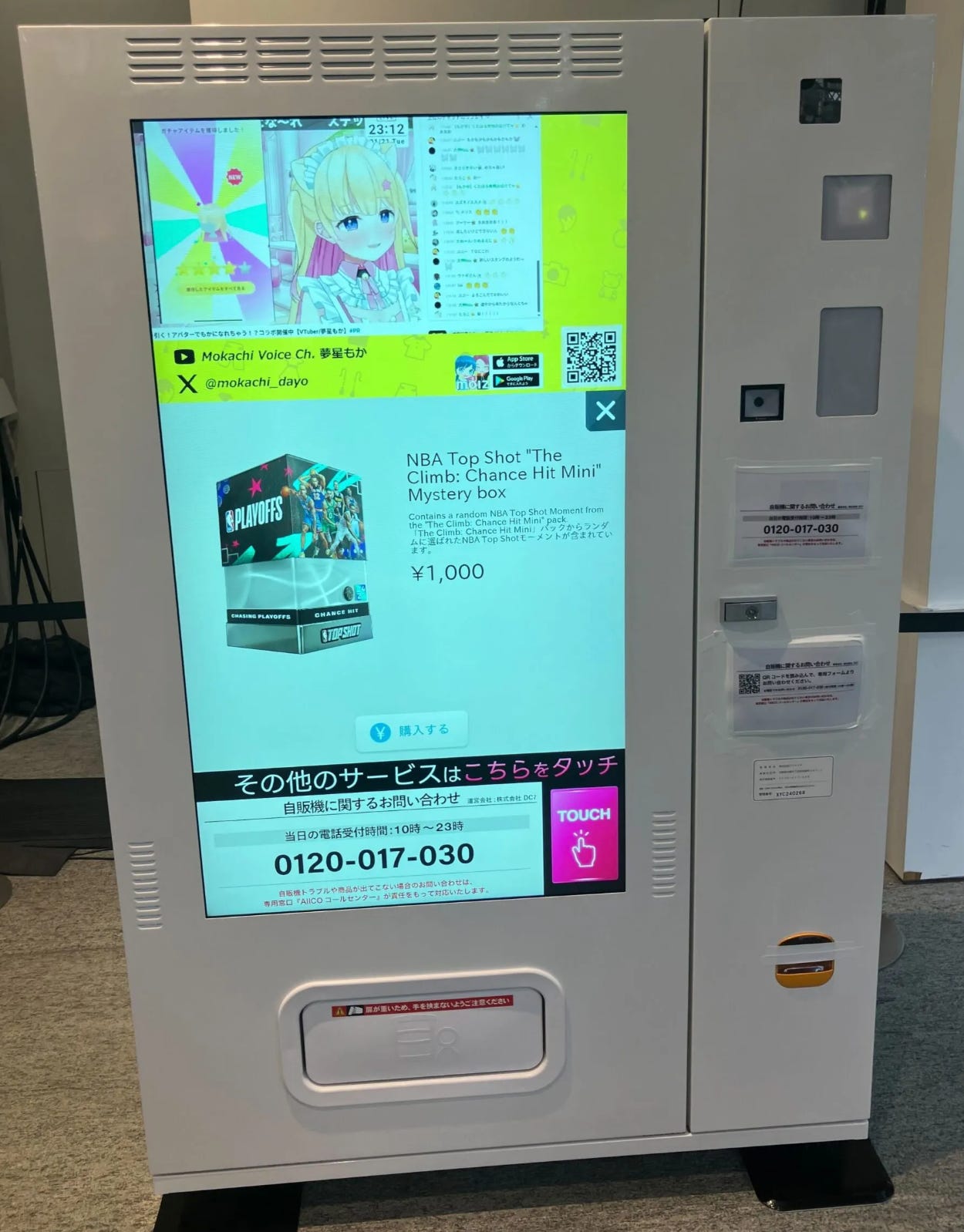
First, Dapper Labs’ NBA Top Shot NFTs are now available for purchase through physical vending machines in Japan. People can now buy Top Shot moments with fiat, with gamified features coming in the future such as stamp passports, instant buyback options, and P2P trading.
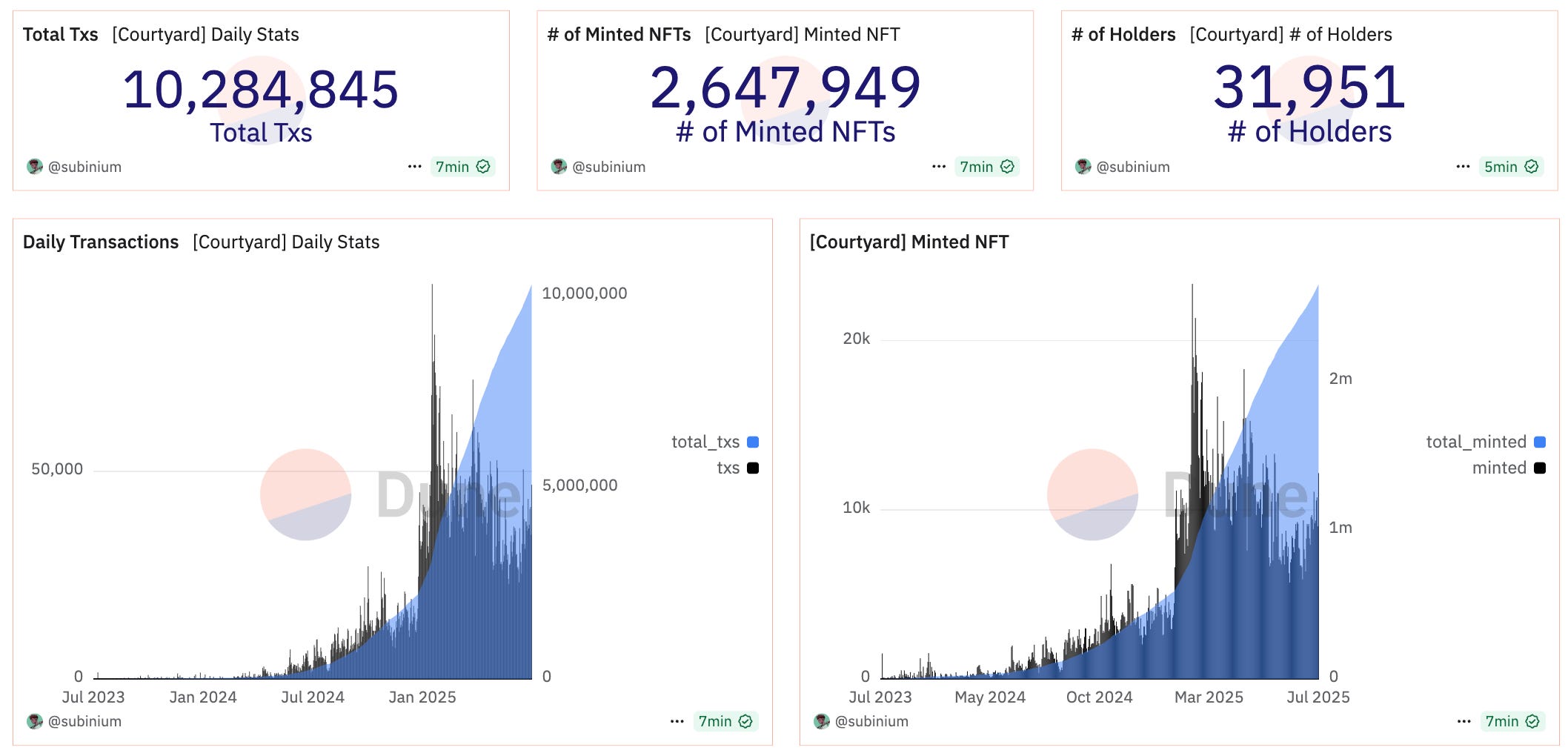
Second, Courtyard announced a $30M Series A fundraise, led by Forerunner Ventures. The company that digitized, vaulted, and onchainified physical trading cards has come a long way since I covered them nearly 2 years ago and now has $50 million in sales per month 👀
Since launch, Courtyard has minted 2.6M+ NFTs (or cards/assets) and has 32k holders, becoming another underappreciated case study of success in the space.
There’s a couple themes from these developments that continue to make the case for NFTs and tokenization of assets (not just the typical RWAs from tradfi) interesting.
Bringing digital distribution to physical spaces
Dapper’s NBA Top Shot expansion to physical vending machines is interesting because NFTs generally live in digital spaces: social media pfps, online marketplaces, and the blockchain.
We’re now seeing another experiment around the distribution of these digital collectibles in physical spaces, specifically vending machines. Japan may not have the largest NBA fandom, but they are familiar with digital goods and are the OG’s of gacha.
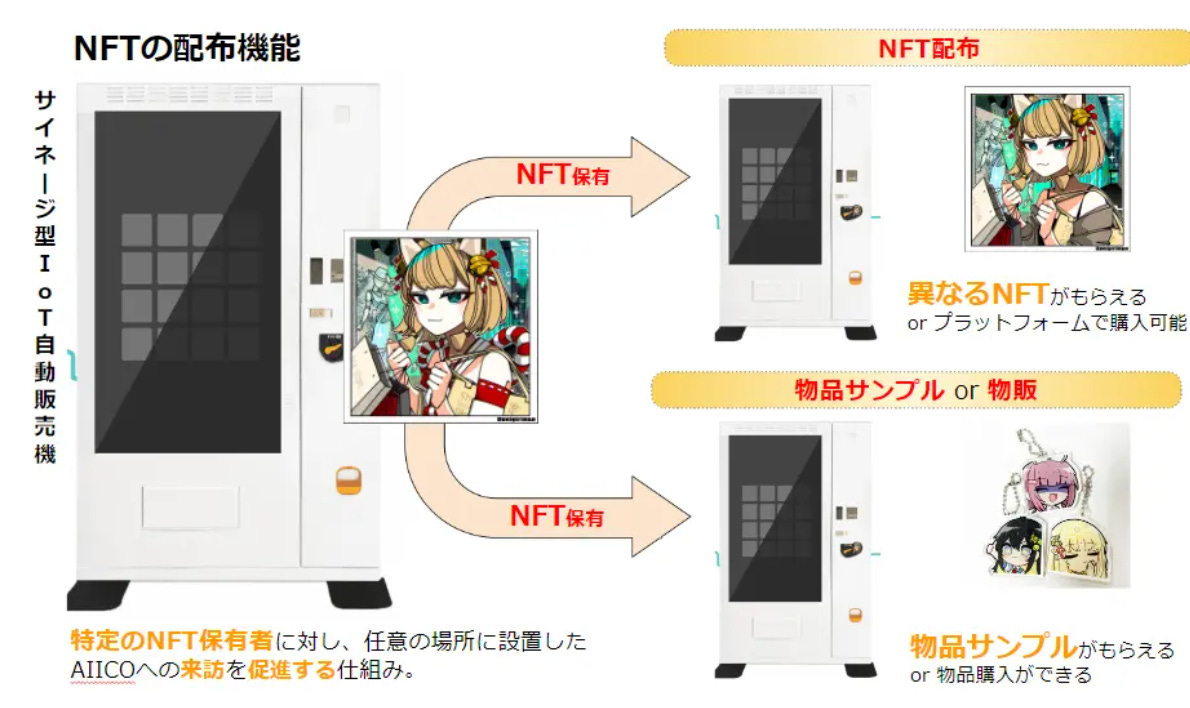
What’s interesting is these vending machines aren’t just selling NFTs or other digital products. They gamify the collection in various ways, with one of the original proposed concepts being if you held specific NFTs, the machine would distribute physical products to the holder. In the example, it’s a keychain.
If successful, some version of these scenarios would be the next step(s) of NBA Top Shot’s rollout to gamify the vending machine experience:
Complete the 2025-2026 NBA season passport and receive a special Top Shot moment
Complete the 2025-2026 NBA season passport and receive physical merch signed by a NBA player
Receive special vending machine-exclusive Top Shot moments
Apply a randomized bonus NFT or physical collectible reward. This could even be a mini-game, creating a more engaging experience.
Placing these vending machines in a NBA arena or event and incorporating the above mechanics and incentives catered towards that team and its fans
Additionally, Dapper has rights to another very high-profile IP: Disney Pinnacle. Although it’s in an earlier stage, the vending machine for digital collectibles makes a lot of sense here as well, especially in Disney Stores and theme parks.
Putting common concepts at the forefront
As crypto and web3 applications become mainstream, we continue to work on making sure the consumer apps and products are approachable and easily understood. The language and concepts we use have improved, and the distribution step (via minting and transferring) is the next area of opportunity.
Courtyard has leaned into this heavily, naturally because they have focused on physical products and collectibles everyone is aware of (vs creating something completely new), and distributed them through digital vending machines.
The team launched them in March 2024 and moved away from the more operationally intensive drop model, contributing to their growth.
On top of that, it was interesting to read the Fortune article detailing Courtyard’s Series A fundraise because there was only one mention of the term ‘NFT’ and no other industry terms.
Short-term vs. long-term views
I still remember the 💡 moment that got me into NFTs when I was introduced to NBA Top Shot. I envisioned a scenario where a flashy play from an NBA game turned into a NFT and was sent to every fan in attendance, all in real-time. 4+ years later, I’m not sure if we’re any closer to that hypothetical becoming a reality (IMO it’s more due to legal reasons than anything else).
We tend to overestimate the short term and what new tech can do, and I’m a prime example of this with my first touchpoint for blockchain tech via digital trading cards. But over time, we underestimate the longterm and we’re seeing that vision playing out, with help from concepts that we already know and love.
See you next week!
Thanks for sharing!
The conclusion that most crypto assets are securities doesn't necessarily lead to the registration of your Labubu collection. The realization that the former doesn't always imply the latter is precisely what will help the crypto builders who are building useful things.